Veneers or composite restoration: which to choose for a perfect smile
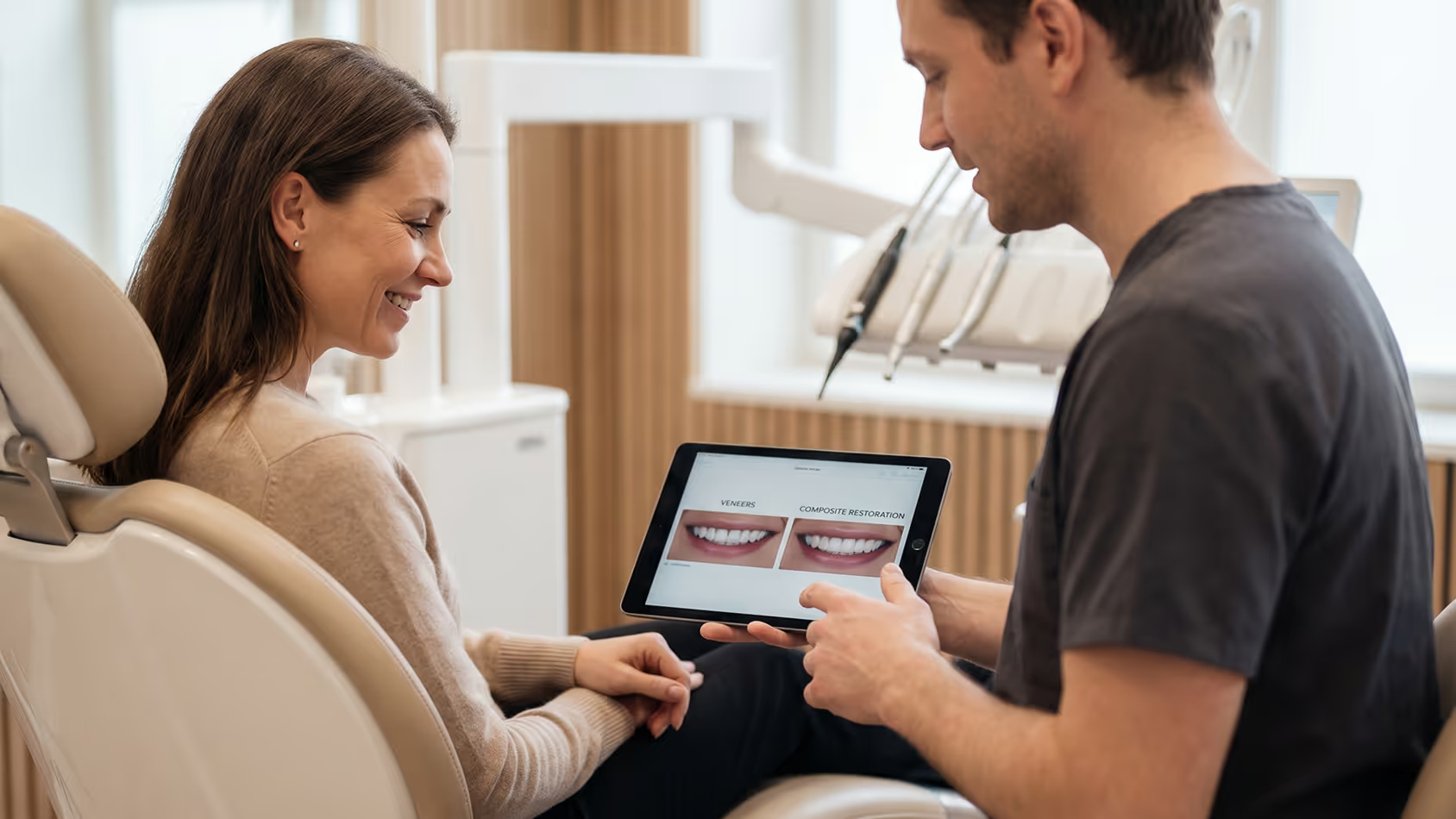
Patients who want to transform their smile will sooner or later ask the same question: ceramic veneers or composite restoration? Both methods produce a visible aesthetic result — but that is where the similarity ends. Their longevity, invasiveness, cost, and clinical indications differ fundamentally.
In this article, the ALLURE DENTAL team breaks down both methods without marketing spin: when each one is justified, what trade-offs you will need to accept, and what "better" actually means in a specific clinical situation.
What is a veneer and how does it differ from a restoration
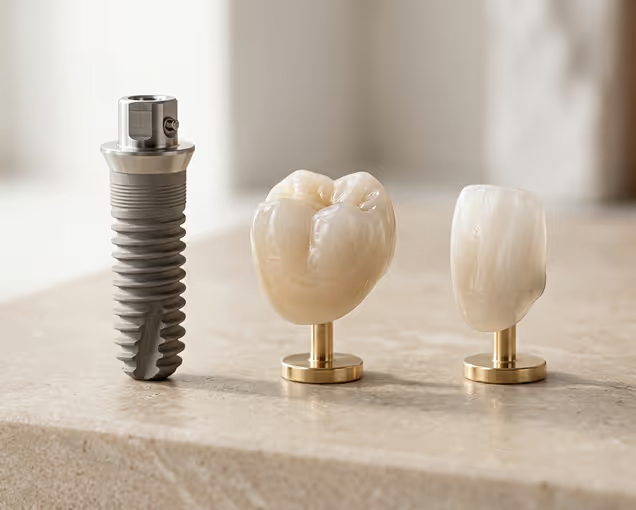
A veneer is a thin, non-removable facing (typically 0.5–0.7 mm) that is bonded to the labial (front) surface of the tooth. It is fabricated in a dental laboratory from ceramic or zirconia, based on an individual impression or digital scan.
A composite restoration is the rebuilding of a tooth's shape and color directly in the dentalchair using a light-cured composite material, which the dentist applies in layers and polymerizeswith UV light. Depending on the technique, this is either a direct restoration (completed in oneappointment) or an indirect composite veneer (fabricated in the laboratory).
The key difference lies in the material, the process, and the longevity of the result.
Comparison by key criteria
1. Longevity
Ceramic veneers, with proper care, last 20 years or more. Ceramic does not absorb staining pigments from coffee, tea, or wine, does not yellow over time, and does not wear at the same rate as natural tooth tissue.
Composite restorations typically require correction or replacement after 4–7 years.
The material is prone to gradual darkening, micro-chipping, and color shift — particularly with frequent consumption of pigmented drinks and smoking.
Important: longevity depends not only on the material, but also on the clinician's technique, the quality of materials used, and the patient's commitment to maintenance.
2. Aesthetics
Modern ceramics (E-max, lithium disilicate) replicate the optical properties of natural enamel — translucency, depth, and natural sheen. An experienced dental technician can fabricate a veneer that is indistinguishable from the adjacent teeth.
A high-quality composite restoration from the hands of a skilled restorative dentist also delivers an excellent result — especially immediately after treatment. However, the material gradually loses its shine and may show a slight shade shift after 2–3 years.
Bottom line: for maximum long-term aesthetics — a veneer. For a great result "right now" at alower cost — a quality direct restoration.
3. Tooth preparation (how much natural tooth is affected)
This is the most significant criterion from the perspective of conservative dentistry.
Classic veneer: requires grinding 0.3–0.7 mm of enamel from the labial surface of the tooth. This is an irreversible procedure — once prepared, the tooth will always require a covering.
Ultra-thin veneers (luminers, no-prep veneers) are placed without preparation or with minimal reduction (up to 0.2 mm). They are not suitable for every clinical case, but where they are — they preserve the maximum amount of natural tissue.
Direct composite restoration in most cases requires no preparation at all. The dentist works on the tooth surface without touching healthy tissue.
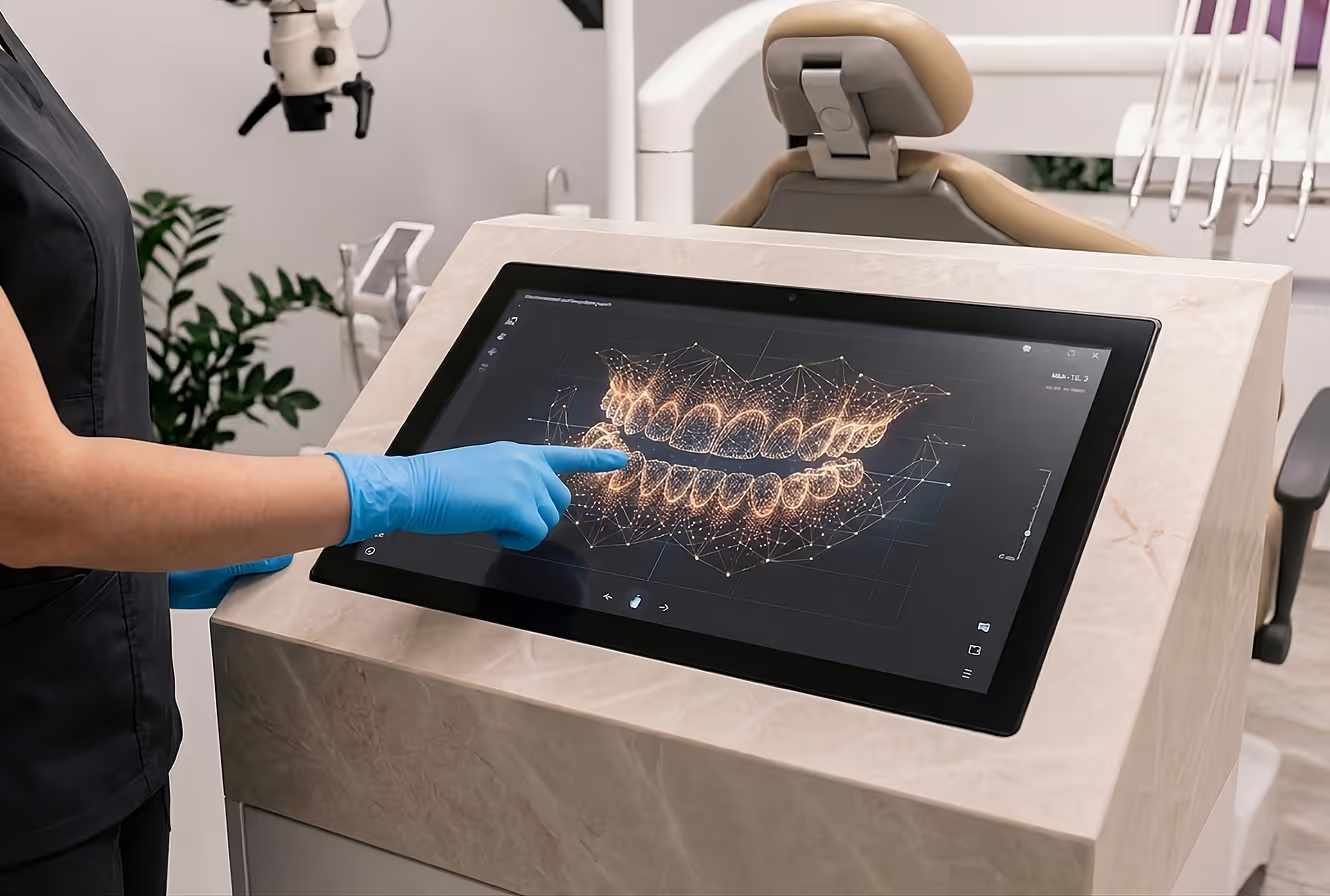
At ALLURE DENTAL, every case begins with digital smile design (Digital Smile Design) — the patient sees the projected result before any treatment begins.
4. Treatment process and number of appointments
{{table1}}
5. Cost
Ceramic veneers carry a higher initial investment, reflecting the dentist's work, dental laboratory fees, and premium-grade materials.
At ALLURE DENTAL:
- Ceramic veneer (standard) — 18,000 UAH per unit
- Ceramic veneer (premium) — 30,000 UAH per unit
- Artistic composite restoration ASTERIA — 8,000 UAH per tooth
An important note: calculate the full lifetime cost, not just the upfront price.
When veneers are the right choice — and when restoration is
Veneers are the right choice when:
- Teeth have significant yellowing or discoloration that whitening cannot address
- There are chips, cracks, or wear on the incisal edge
- The shape of several teeth needs correction simultaneously for a symmetrical result
- There is a diastema (gap) or spacing between teeth
- The patient wants a stable result for 10+ years
- A comprehensive smile design is planned (4, 6, 8, 10, or 12 veneers)
Composite restoration is the right choice when:
- The damage is localized: a small chip or a single defect
- The teeth are young and healthy, and preserving maximum tissue is a priority
- A quick result is needed — for example, before an important event
- The patient has not yet decided on their final desired outcome
- The patient is a child or teenager whose teeth are still developing
What the data shows
Research data shows a 10-year survival rate for ceramic veneers of approximately 98%. For direct composite restorations in the front zone, this figure is significantly lower — around 60–70% without notable corrections. This does not mean that restoration is "bad" — it means that each method has its place.
A combined approach: when 1 + 1 = the best solution
In clinical practice at ALLURE DENTAL, a combination approach often proves to be the optimal solution. For example:
- Veneers on 6 front teeth + direct restoration on side teeth with minor defects
- Whitening → veneers only on teeth that do not respond to whitening
- Temporary restoration as a "test drive" of the shape → then transferred to ceramic. This approach achieves the best balance between tissue preservation, aesthetics, and cost.
Aftercare
After veneers:
- Avoid biting hard foods with the front teeth (nuts, crackers)
- Wear an occlusal splint at night if bruxism is present
- Regular professional hygiene every 6 months
- Avoid chewing on pens, nails, etc.
After composite restoration:
- Same recommendations as above
- Pay extra attention to staining: limit coffee and tea in the first days after polymerization
- Polishing at the clinic every 6–12 months — restores the original shine
How we make decisions at ALLURE DENTAL
Before proposing any solution, we go through several steps:
- Photo and video smile analysis — we assess shape, color, symmetry, and the positionof teeth relative to the lips.<br>
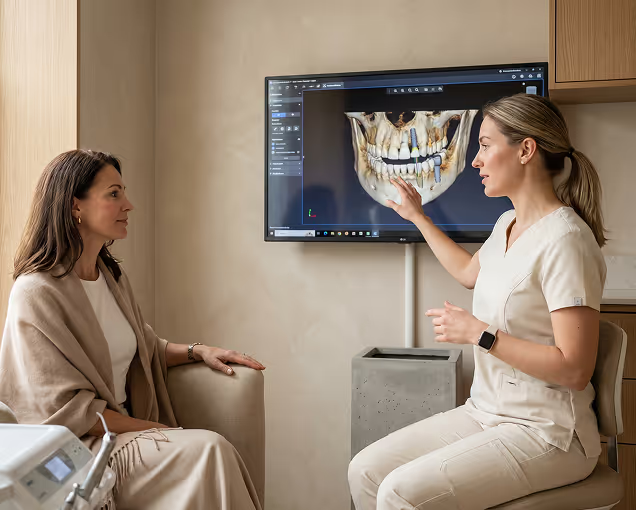
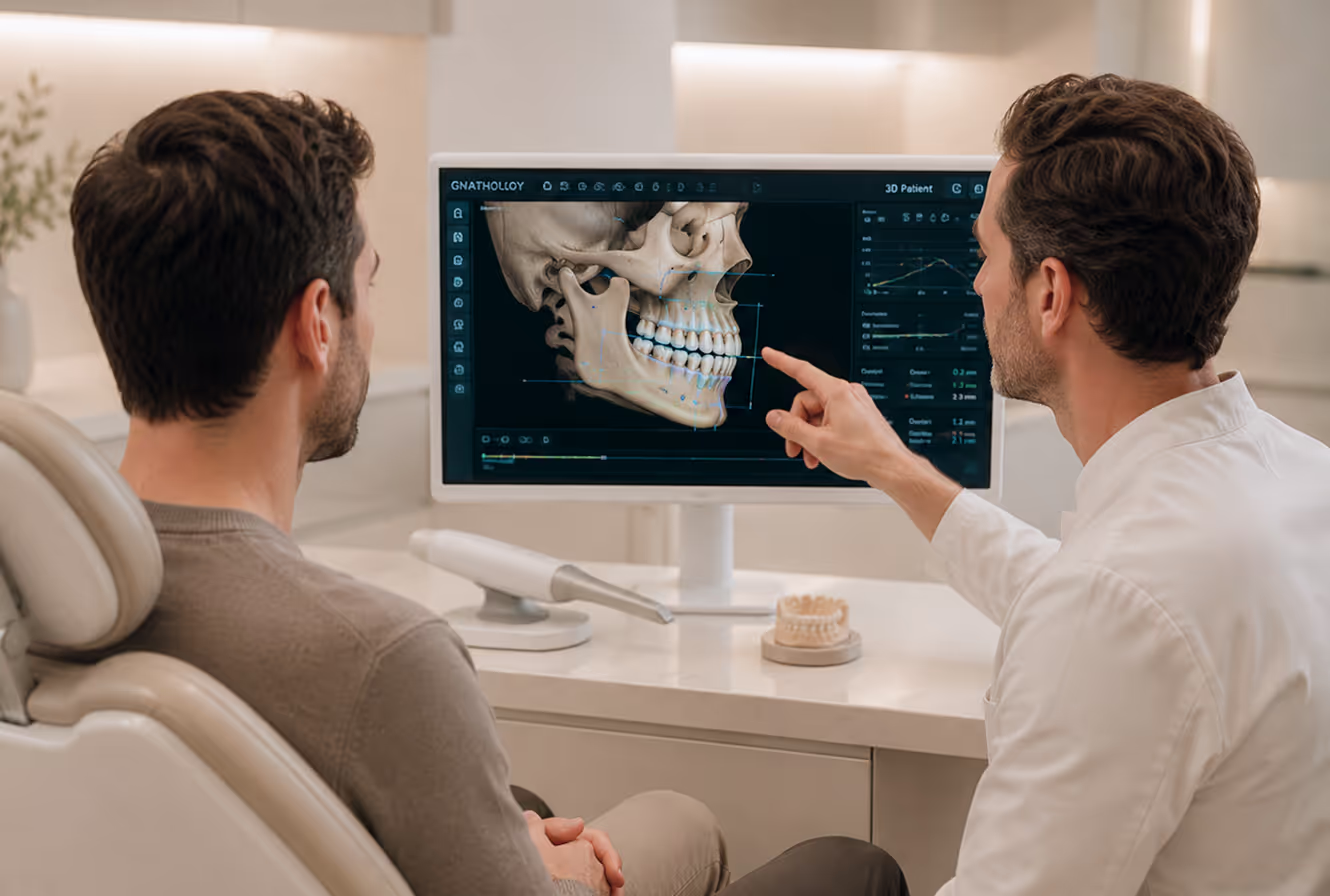
- 3D CT scan or intraoral scanning — we check the condition of bone tissue, roots, andthe bite.<br>
- Digital Smile Design — we model the result and show the patient before any treatmentbegins.<br>
- Wax-up or mock-up — when necessary, we fabricate a diagnostic model or atemporary construction directly on the teeth.<br>
- Material and method selection — only after a full understanding of the clinical situationand the patient's goals.
We do not recommend veneers for the sake of veneers. And we do not dismiss restorationwhen it is genuinely the right solution.
| widths: 32% 28% 40% |
| | Ceramic veneer | Direct composite restoration |
| Number of appointments | 2-6 | 1-4 |
| Temporary constructions | Yes (temporary acrylic veneers between sessions) | No |
| Dental technician involvement | Yes | No |
| Digital smile design | Recommended | No |
Frequently asked questions
Is getting veneers painful?
The preparation procedure is performed under local anesthesia, sothere is no discomfort during the appointment. After the anesthetic wears off, some toothsensitivity is possible for a few days — this is a normal response to enamel preparation. In mostpatients it resolves within 3–7 days.
Can veneers be placed on crooked teeth?
Veneers can partially correct minor deviations intooth shape and position, but they do not replace orthodontic treatment. If the teeth aresignificantly misaligned or there are bite issues, the ALLURE DENTAL team first recommendsaligners or braces — and only then aesthetic restoration.
Can veneers be whitened if they have yellowed?
No. Ceramic veneers do not respond towhitening agents — either home or clinical. This is precisely why veneer shade is selectedbefore treatment begins: natural teeth are whitened first, and the veneers are then fabricated tomatch the new shade.
How much do veneers cost in Kyiv?
The cost depends on the material (ceramic, zirconia,luminers), the number of units, and the complexity of the clinical case. At ALLURE DENTAL, theinitial consultation with digital smile design provides an accurate treatment plan with full pricing— before any procedures begin.
How long do veneers last compared to restorations?
Ceramic veneers statistically maintaintheir appearance for 20 years or more. Direct composite restorations require correction orreplacement on average after 4–7 years. Both methods require regular professionalmaintenance.
Can veneers be removed if you change your mind?
Unfortunately, no. Once the enamel hasbeen prepared, the tooth permanently requires a covering. This is an important considerationwhen making the decision.
Conclusion
Veneers or restoration — there is no universal answer. There is only the right solution for aspecific tooth, a specific person, and specific expectations. If longevity, color stability, and acomprehensive smile transformation are your priorities — ceramics win on every parameter. Ifyou need a precise result with minimal intervention — a quality direct restoration from anexperienced clinician delivers excellent results.
At ALLURE DENTAL, we always begin with diagnostics, not a price list. Book a consultation —and together we will find the solution that is right for you.