Crown, implant or veneer — a full comparison: which is best?
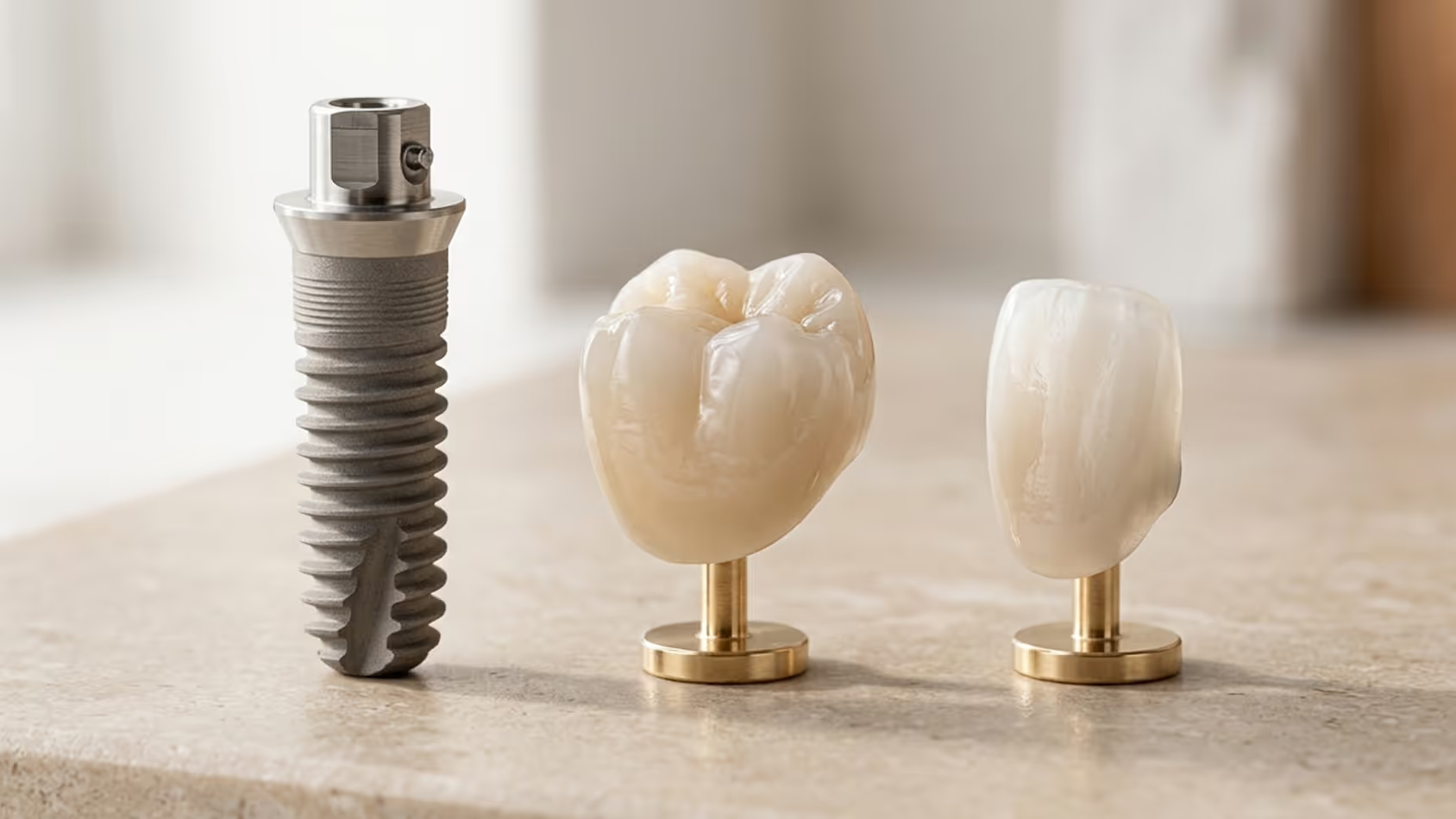
"Crown, implant, or veneer" — the doctors at ALLURE DENTAL hear this question every day. And every day the answer is the same: it depends on the situation. These three restorations solve different problems and often aren't in competition with each other at all.
But without an explanation, that's hard for a patient to grasp. So here is a detailed breakdown: what each option is, when it applies, and what the choice actually comes down to.
The Key Difference: What Each Restoration Addresses
{{table1}}
If the tooth is present — the question is between a veneer and a crown. If the tooth is absent — the question is about an implant or a bridge. That is the first and most fundamental distinction.
Veneer: When and for Whom
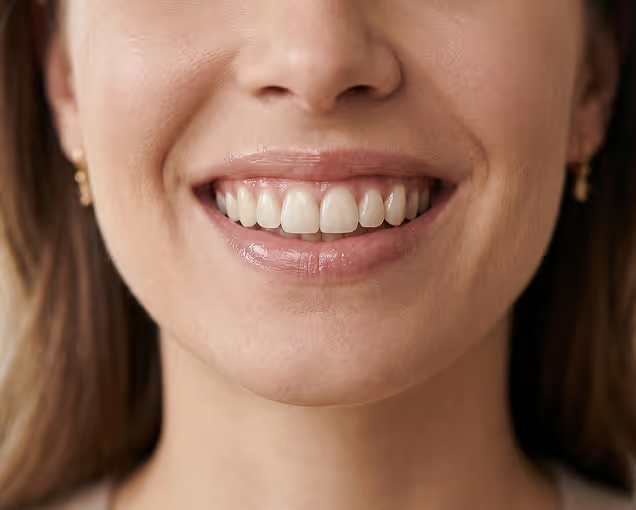
A veneer is a thin ceramic overlay bonded to the front surface of a tooth. It changes colour, shape, and size — but does not restore structural integrity.
Suitable when:
- The tooth is vital, healthy, with an intact or near-intact root
- The issue is aesthetic: colour, shape, or minor positioning
- A comprehensive smile transformation is needed (6, 8, or 10 veneers)
- Tooth wear, chipped incisal edges, or discolouration
Not suitable when:
- The tooth is severely broken down (more than 50% of the crown structure is missing)
- The tooth requires full coverage following endodontic treatment
- The restoration is on a posterior tooth under significant chewing load
Cost at ALLURE DENTAL:
- Ceramic veneer standard — 18,000 UAH
- Ceramic veneer premium — 30,000 UAH
Crown: When and for Whom
A crown is a cap that covers the entire coronal portion of a tooth. It is needed when a tooth is so compromised that a veneer or filling will not provide sufficient strength.
Suitable when:
- The tooth has had root canal treatment (a devitalised tooth becomes brittle)
- Significant coronal breakdown from decay or trauma
- Coverage is needed after a post or core build-up
- Restoring a tooth on an implant
Advantages over veneers:
- Greater coverage — encases the tooth on all sides
- Suitable for posterior teeth
- Can be placed over a post or core build-up when the tooth is severely broken down
Cost at ALLURE DENTAL:
- Ceramic/zirconia crown Emax — 13,000 UAH
- Anatomical zirconia crown — 15,000 UAH
- Ceramic/zirconia crown on implant — 13,000 UAH
- Zirconia crown on Straumann — 16,000 UAH
Implant: When and for Whom
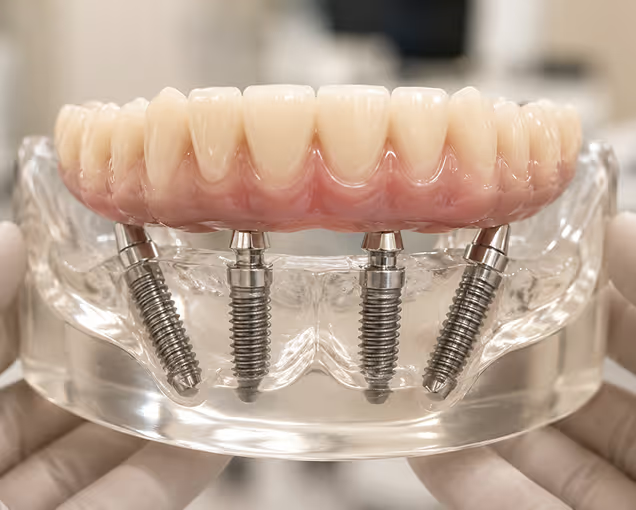
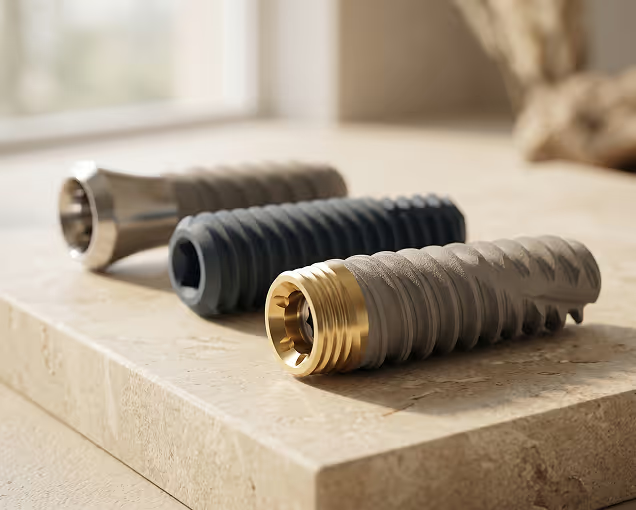
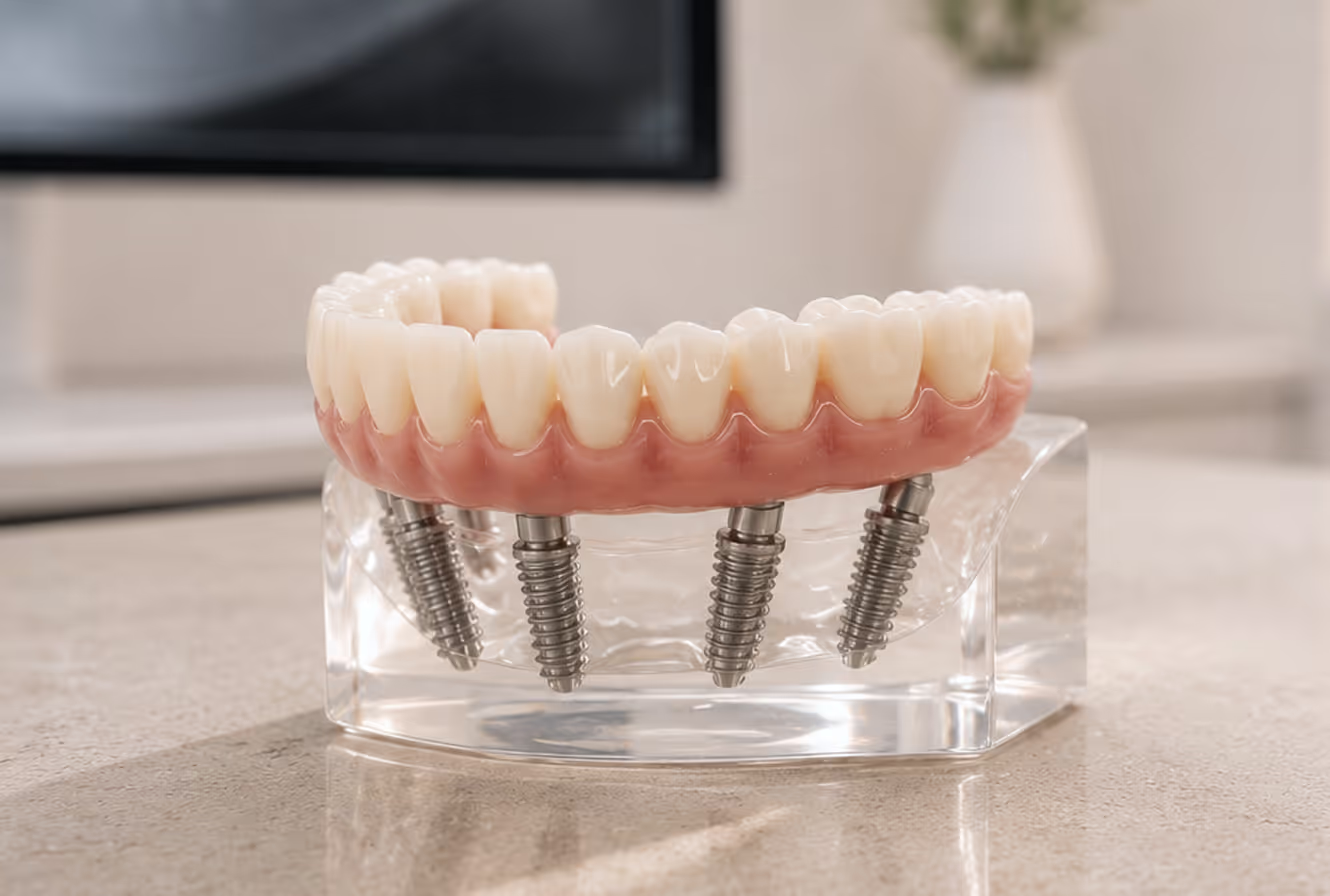
An implant is the solution for a missing tooth. It replaces not just the crown but also the root — and that distinction matters fundamentally.
Suitable when:
- The tooth is absent (extracted or lost through trauma)
- Grinding down adjacent teeth for a bridge needs to be avoided
- Stopping bone atrophy at the extraction site is a priority
- A long-term solution lasting decades is required
Advantages over a bridge:
- Adjacent teeth remain untouched
- Stops bone atrophy — a bridge does not
- A fully independent restoration — easier to keep clean
- More durable with proper care
Cost at ALLURE DENTAL:
- Korean implant + crown — from 30,000 UAH (turnkey)
- MegaGen implant + crown — from 38,000 UAH (turnkey)
- Straumann implant + crown — from 47,000 UAH (turnkey)
Common Clinical Scenarios and Recommended Solutions
Scenario 1: A front tooth with discolouration and a minor chip
Solution: veneer or direct restoration. The tooth is vital, the root is intact — there is no basis for a crown. A veneer corrects the colour and restores the shape.
Scenario 2: A root-treated tooth with significant breakdown
Solution: core build-up + crown. A devitalised tooth without sufficient coronal structure cannot be reliably restored with a veneer. A crown covers the tooth fully and protects it from fracture.
Scenario 3: A missing tooth in the posterior zone
Solution: implant + crown. The adjacent teeth are healthy — grinding them down for a bridge makes no sense. The implant restores the tooth independently and stops bone atrophy.
Scenario 4: A comprehensive smile transformation (8–10 teeth)
Solution: Digital Smile Design + veneers, or a veneer/crown combination. If all teeth are present and healthy — veneers. If some teeth have been root-treated or are heavily broken down — those teeth receive crowns, the rest receive veneers.
Scenario 5: Several consecutive missing teeth
Solution: multiple implants, or an implant-supported bridge. Each case is assessed individually: number of implants, prosthesis type, available bone volume.
What You Should Never Do
Place a bridge instead of an implant "because it's cheaper" A bridge on natural teeth means grinding down two healthy teeth for the sake of one missing one. Those teeth become more vulnerable and will require treatment in the future. When an implant is an option, it is always the preferred choice.
Choose veneers instead of orthodontics If teeth are crooked due to a bite anomaly, veneers mask the problem without solving it. For significant crowding, orthodontic treatment should always be offered first.
Delay after a tooth extraction Every month without a tooth means gradual bone atrophy. The longer the wait, the more complex — and costly — implantation becomes in the future.
| widths: 20% 33% 33% |
| Restoration | What it addresses | Is a natural tooth required? |
| Veneer | Appearance (front surface only) | Yes, always |
| Crown | Full shape and function of the tooth | Yes (own root or post) |
| Implant | A missing tooth entirely (root + crown) | No — replaces the absent tooth |
Frequently asked questions
Can a veneer be placed on a crown?
No — a veneer bonds to the enamel of a natural tooth. It cannot be placed on a crown. If the appearance of a crown needs to change, the crown is replaced entirely.
Implant or bridge — which is better?
All else being equal — an implant. It requires no preparation of adjacent teeth, stops bone atrophy, and is more durable. A bridge is a justified option if the adjacent teeth already need crowns, or if implantation is contraindicated.
Can an old metal-ceramic crown be replaced with a zirconia one?
Yes. The old crown is removed and a new one is fabricated. If the tooth underneath is in satisfactory condition — a straightforward crown replacement. If the tooth has deteriorated — treatment first, then a new crown.
How long does each restoration last?
Veneer — 10–20 years. Crown — 10–20 years or more. Implant (titanium screw) — lifetime with proper care; crown on the implant — 15–20 years. All timescales depend on material quality, clinical execution, and patient care.
Is fitting a crown painful?
Tooth preparation for a crown is performed under anaesthesia. Afterwards, mild sensitivity for a few days is possible. If the tooth has been root-treated (no nerve) — there is no sensitivity at all.
Conclusion
A crown, an implant, and a veneer are not competitors. They are different tools for different jobs. A veneer changes the appearance of a natural tooth. A crown restores a damaged one. An implant replaces a missing one.
The right choice is always the same: the one that matches your clinical situation — not the one that is cheapest or fastest. That is why at ALLURE DENTAL, every treatment begins with diagnostics, not a price list.