Aligners or braces: a complete comparison for adults
When a patient decides to straighten their teeth, the first question is almost always the same: aligners or braces? Both methods genuinely straighten teeth — but they work differently, involve different trade-offs, and suit different situations.
There's no single answer to "which is better." There's only "what's right for you" — and that depends on the complexity of your bite, your motivation, lifestyle, and treatment expectations. Here's a complete, no-marketing comparison from the doctors at ALLURE DENTAL.
How Each Method Works
Braces are a fixed system of metal, ceramic, or sapphire brackets bonded to the teeth and connected by an archwire. The doctor gradually changes the wires, increasing pressure — and the teeth move into the correct position. You cannot remove braces on your own.
Aligners are a series of clear, removable plastic trays, each slightly different from the previous one. The patient wears each tray for approximately 2 weeks, then moves on to the next. Teeth gradually shift into the planned position. Aligners are removed for eating and brushing.
Both methods move teeth by applying pressure to bone tissue. The difference lies in how that pressure is created — and whether the appliance can be taken out.
Comparison by Key Criteria
1. Effectiveness and Case Complexity
This is the most important criterion — and one that aligner advertising often downplays.
Braces handle the majority of complex cases: significant crowding, serious bite anomalies, rotation of molars, vertical tooth movements. For complex cases, they remain the gold standard. Additional elements such as micro-implants, expanders, distalizers, and springs may also be required.
Aligners are effective for mild to moderate complexity: minor crowding, gaps between teeth, moderate bite issues. Modern systems (Invisalign, CRYSTALLINE) have advanced significantly and can now address many cases previously considered suitable only for braces. However, there are cases where aligners simply cannot replace braces. They may also require additional supporting elements during treatment.
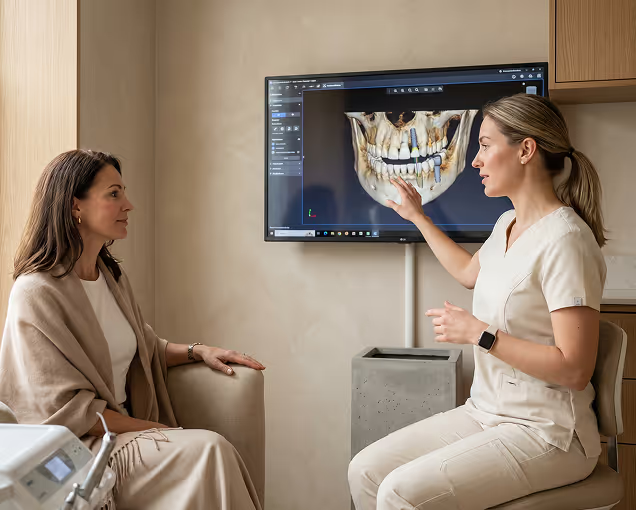
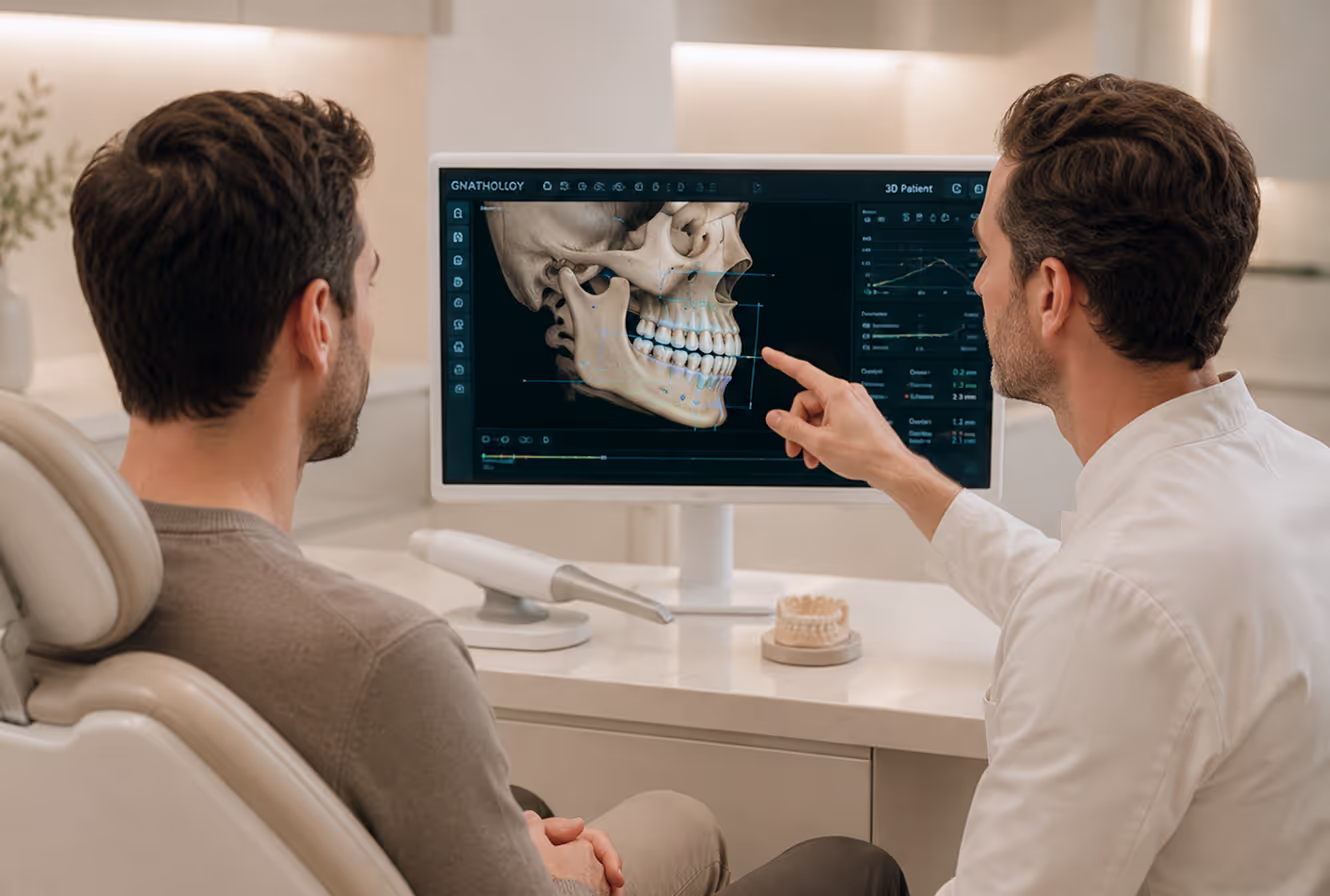
The choice of method always begins with diagnostics. The orthodontist reviews a CT scan and models — only then recommending which method is appropriate for a specific case.
2. Aesthetics During Treatment
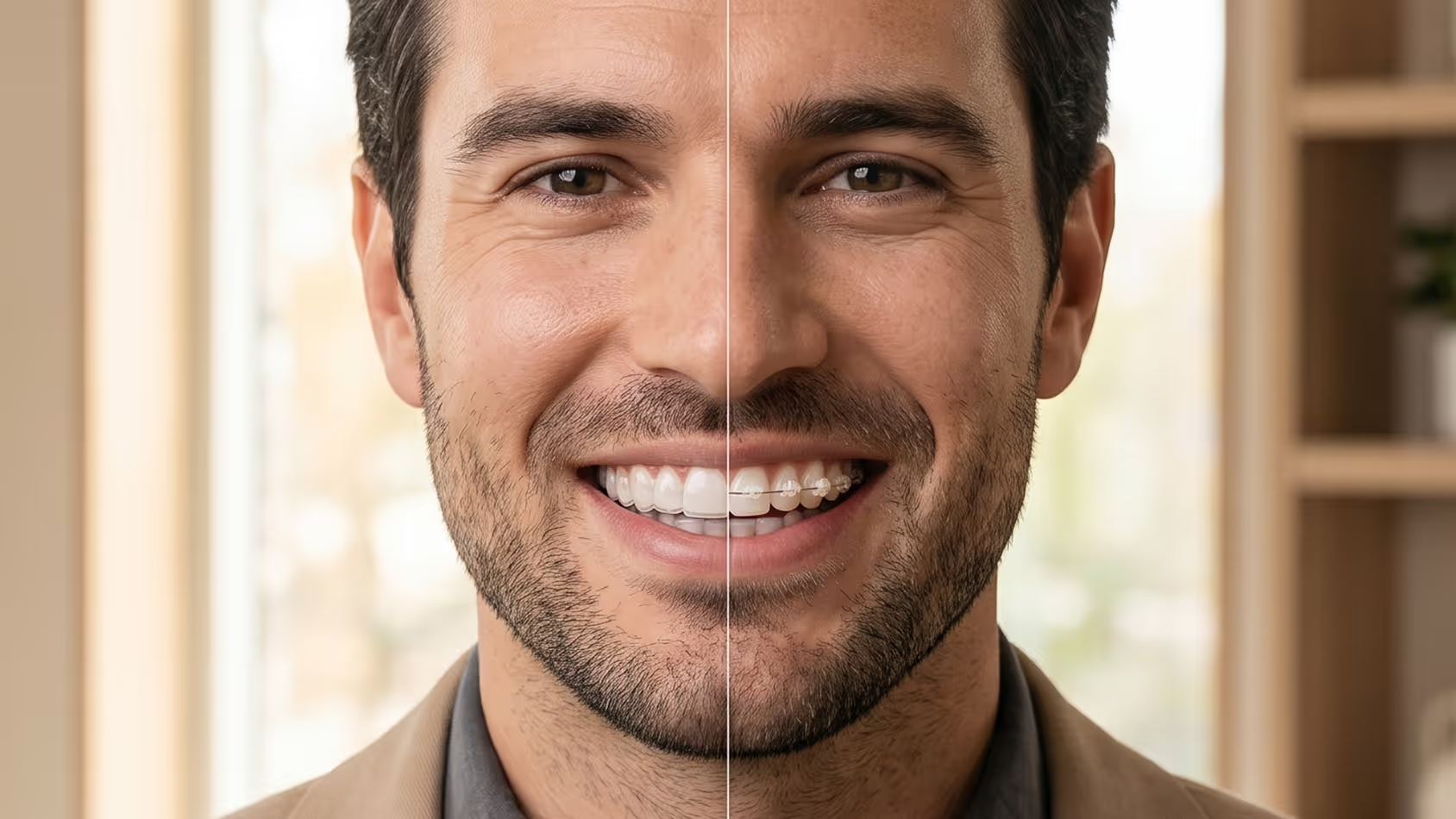
Aligners are virtually invisible. A clear tray on the teeth goes unnoticed in everyday communication. For adults who don't want to draw attention to orthodontic treatment, this is a key factor.
Braces are always visible. Even ceramic and sapphire brackets are noticeable on close inspection. Lingual (inner) braces are placed on the inside of the teeth and invisible from the outside, but they are the most expensive, technically complex, and uncomfortable option.
3. Comfort and Lifestyle
Aligners:
- Removed before eating — you can eat whatever you like
- Standard brushing, no special tools required
- Must be worn 22 hours a day — discipline is essential
- Can be removed for an important meeting or photo
Braces:
- Dietary restrictions: hard, sticky, and fibrous foods should be cut up or avoided in public
- Brushing is more involved — interdental brushes and an irrigator are needed
- Can't be forgotten or lost — they're always on your teeth
- Not dependent on patient discipline — they work around the clock
4. Treatment Duration
{{table1}}
Aligners achieve comparable results in roughly the same timeframe — provided the patient wears them for the required number of hours. Wearing them less frequently will extend the treatment timeline.
5. Cost
At ALLURE DENTAL:
Braces (per jaw):
- Metal braces (per jaw) — 18,000 UAH
- Self-ligating metal Empower AO (per jaw) — 21,000 UAH
- Ceramic braces — 20,000 UAH
- Self-ligating ceramic Empower AO — 30,000 UAH
- Sapphire braces — 30,000 UAH
- Self-ligating metal with rhodium coating (per jaw) — 23,000 UAH
Aligners:
- CRYSTALLINE full treatment course — €2,200 (full course, both jaws)
- CRYSTALLINE half course — €1,100
Important note: braces prices are listed per jaw, and treatment is typically carried out on both. Regular visits to the doctor every 4–8 weeks throughout the treatment period are also added to the cost. During the consultation, the orthodontist draws up a treatment plan that outlines all appointments and associated costs.
6. Retention Period
After any orthodontic treatment, teeth tend to partially return to their original position. That's why retainers are used after both braces and aligners.
- Fixed retainer (a wire bonded to the inside of the teeth) — 2,000 UAH per jaw
- Removable retainer (a clear tray) — 2,000 UAH per jaw
Who Should Choose Aligners, and Who Should Choose Braces
Aligners are the right choice if:
- You're an adult patient with a mild or moderate bite issue
- Aesthetics during treatment matter (public-facing work, active social life)
- You have strong self-discipline — realistically wearing them 20–22 hours a day
- You have a metal allergy or sensitivity of the gums and lips to hard appliances
Braces are the right choice if:
- Your bite is complex and aligners won't resolve it
- You're a teenager or a patient who struggles to track wearing time
- Predictability matters — braces don't depend on discipline, they work continuously with regular scheduled visits
- Budget is a consideration — braces are somewhat more affordable
- Precise rotation of molars or vertical movements are required
The Myth of "Invisible" Aligners
Aligners are genuinely discreet — but not completely transparent. You'll have small composite attachments (buttons) on your teeth that help the tray grip and move teeth correctly. These are visible on close inspection.
Additionally, some patients experience slight lisping in the first few weeks of wear while the tongue adjusts. This typically resolves within 1–2 weeks.
How Aligner Treatment Works at ALLURE DENTAL
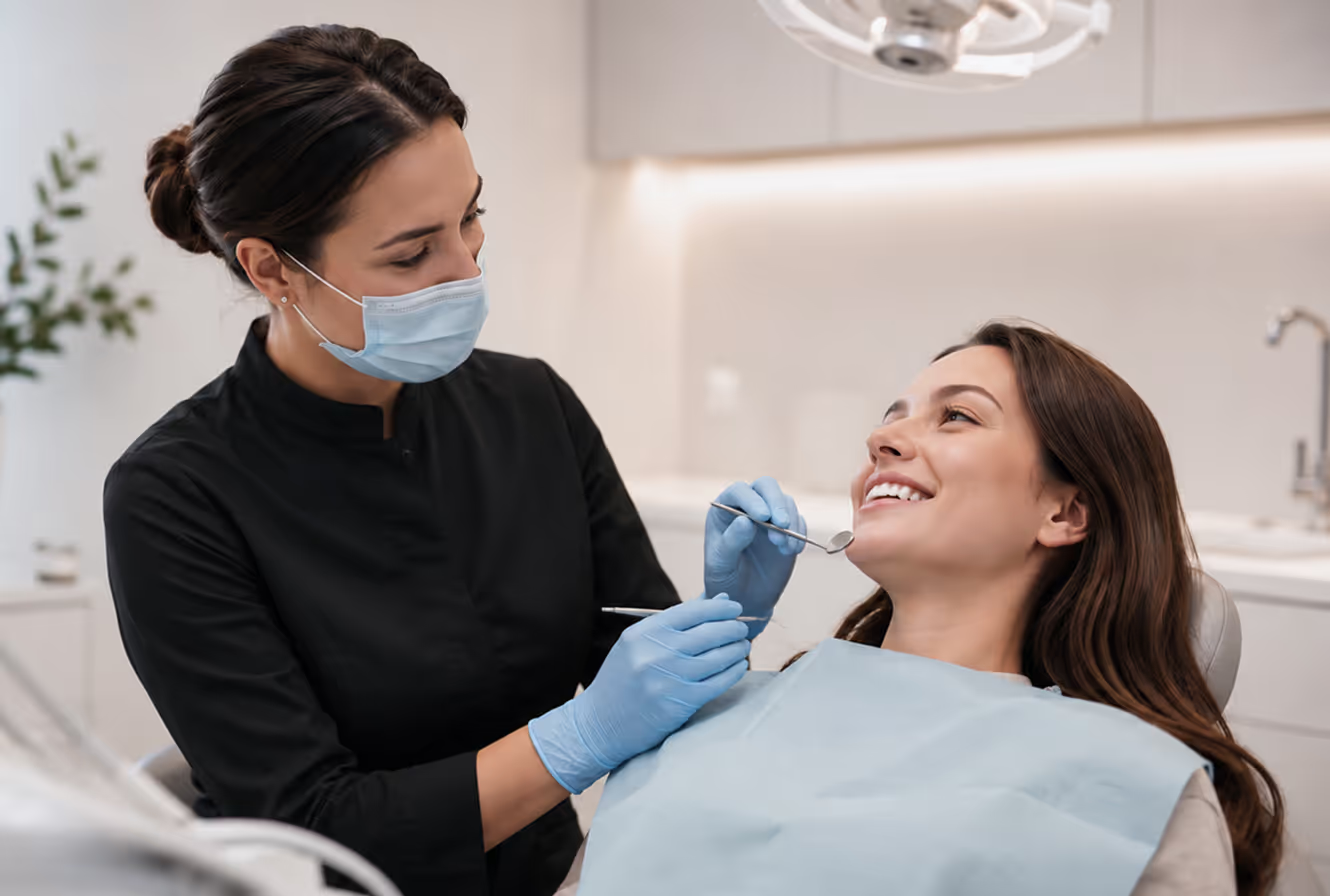
- Orthodontist consultation — bite assessment, photo documentation, discussion of goals and expectations, preliminary treatment plan
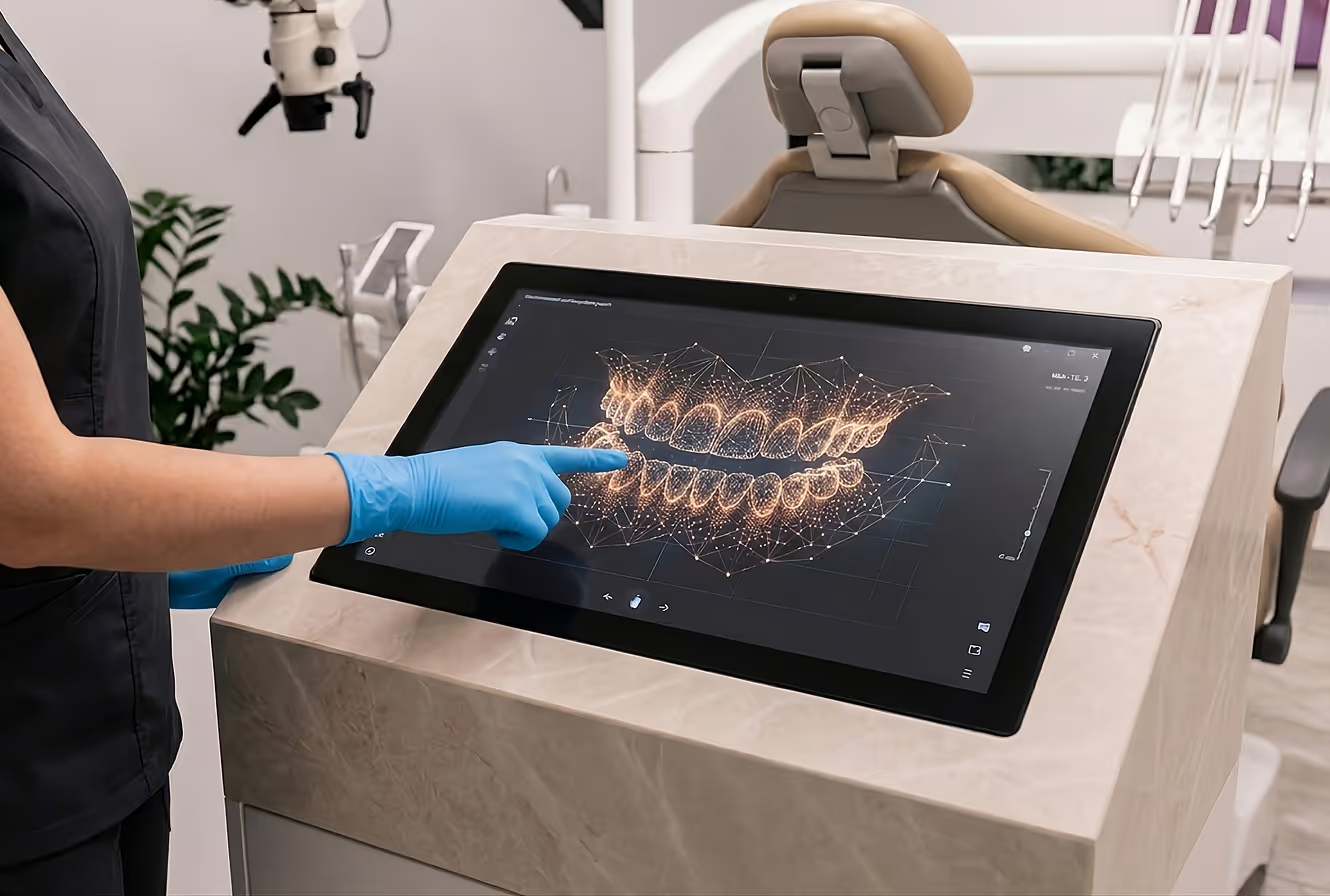
- Digital scanning — jaw impressions without messy putty
- 3D modelling — the patient sees the final result before treatment begins
- Tray fabrication — a custom set for the entire course
- Attachment bonding and delivery of the first set of trays
- Check-up visits every 8–10 weeks
- Retention protocol after active treatment is complete
| widths: 32% 33% 33% |
| | Braces | Aligners |
| Mild case | ~18 months | 6–12 months |
| Moderate case | ~24 months | 12–18 months |
| Complex case | ~~36 months | Not always possible |
Frequently asked questions
Can I switch from braces to aligners mid-treatment?
Technically yes, but it's not always advisable. If part of the movement has already been completed with braces, the orthodontist assesses the remaining work and decides whether aligners can finish the job. Each case is evaluated individually.
Are aligners painful to wear?
In the first few days after switching to a new tray, some mild sensitivity is normal — teeth respond to the change in pressure. This typically passes within 1–2 days. There is no sharp pain. If needed, ibuprofen or paracetamol can be taken.
Are aligners suitable for children?
Aligners are intended primarily for adults and teenagers with a fully permanent dentition — usually from age 14–16. Younger children are treated with other removable and fixed appliances.
How many times a day can I remove my aligners?
As many times as needed — but total daily wear time must be 22 hours. That leaves 2 hours per day for eating, brushing, and special situations.
What happens if I wear aligners for less than 20 hours a day?
Treatment time increases, and in some cases the planned movements may not occur on schedule. The orthodontist will notice the delay at a check-up and adjust the plan accordingly.
Conclusion
There's no "better" method — only the right method for your situation.
If your bite allows it and you're prepared to be disciplined, aligners offer a discreet and comfortable path to straight teeth. If your case is complex or self-discipline isn't your strong suit, braces will deliver an accurate and predictable result.
At ALLURE DENTAL, the orthodontist looks at your bite first — and recommends a method second. Never the other way around.